
Lattanzio KIBS is Ecosystem Partner of the Milan Longevity Summit 2026, contributing to the conversation on the strategic value of a multigenerational workforce and the transformations needed for the future of work
Long-lived human capital: a value to be built
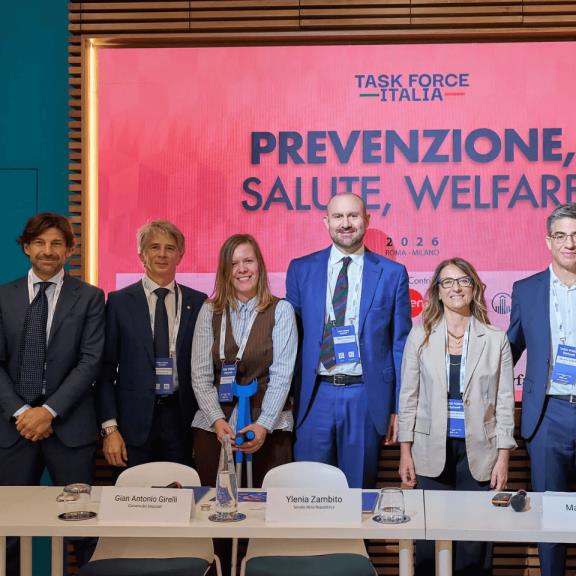
We are living longer. But are organisations ready to turn this transformation into an opportunity? This is one of the central questions addressed in the presentation by Annachiara Annino, Partner at Lattanzio KIBS, who shares data from the Research Centre and moderates a discussion on work, skills, and active ageing, with contributions from Antonio Naddeo, President of ARAN, Valeria Bonilauri from Consorzio ELIS, Cetti Galante, CEO of Intoo, and the Director General of Saipem.
The data reveals a transformation already underway: today, people aged 65 and over account for 24% of the Italian population and generate income exceeding €321 billion. At the same time, while 83% of executives acknowledge the value of a multigenerational workforce, only a minimal share of companies have developed structured age management policies.
The challenge, therefore, is not simply one of managing demographic change, but of turning it into a driver of competitiveness and innovation - through continuous learning, intergenerational knowledge transfer, and organisational models capable of combining productivity, inclusion, and well-being.
An integrated vision of longevity
Lattanzio KIBS has been working on these issues for years, supporting public and private organisations through transformation processes linked to demographic shifts, evolving labour markets, and changing skill sets. In this context, the Milan Longevity Summit represents an important international forum for dialogue between scientific research, policy, and innovation.
With over 8,000 attendees recorded across its first two editions and more than 80 Longevity Labs open to the public, the Summit has established itself as one of the leading international platforms dedicated to longevity. The 2026 edition adopts the "One Health" paradigm, which views human, environmental, and economic health as deeply interconnected dimensions.
The programme brings together researchers, institutions, businesses, and international innovators committed to building new models of development and well-being, structured around four thematic pillars: Longevity, Prosperity, Vitality, and Humanity.
Topics Health | Social development | Centro Studi | Italy | Longevity
.jpg)
.jpg)
.jpg)
Relevant Projects
-960_720.jpg "Supporting Rural Women’s Entrepreneurship in Uzbekistan")


 Worldwide


 Bosnia Erzegovina


 Middle East & North Africa
 Repubblica Dominicana

